
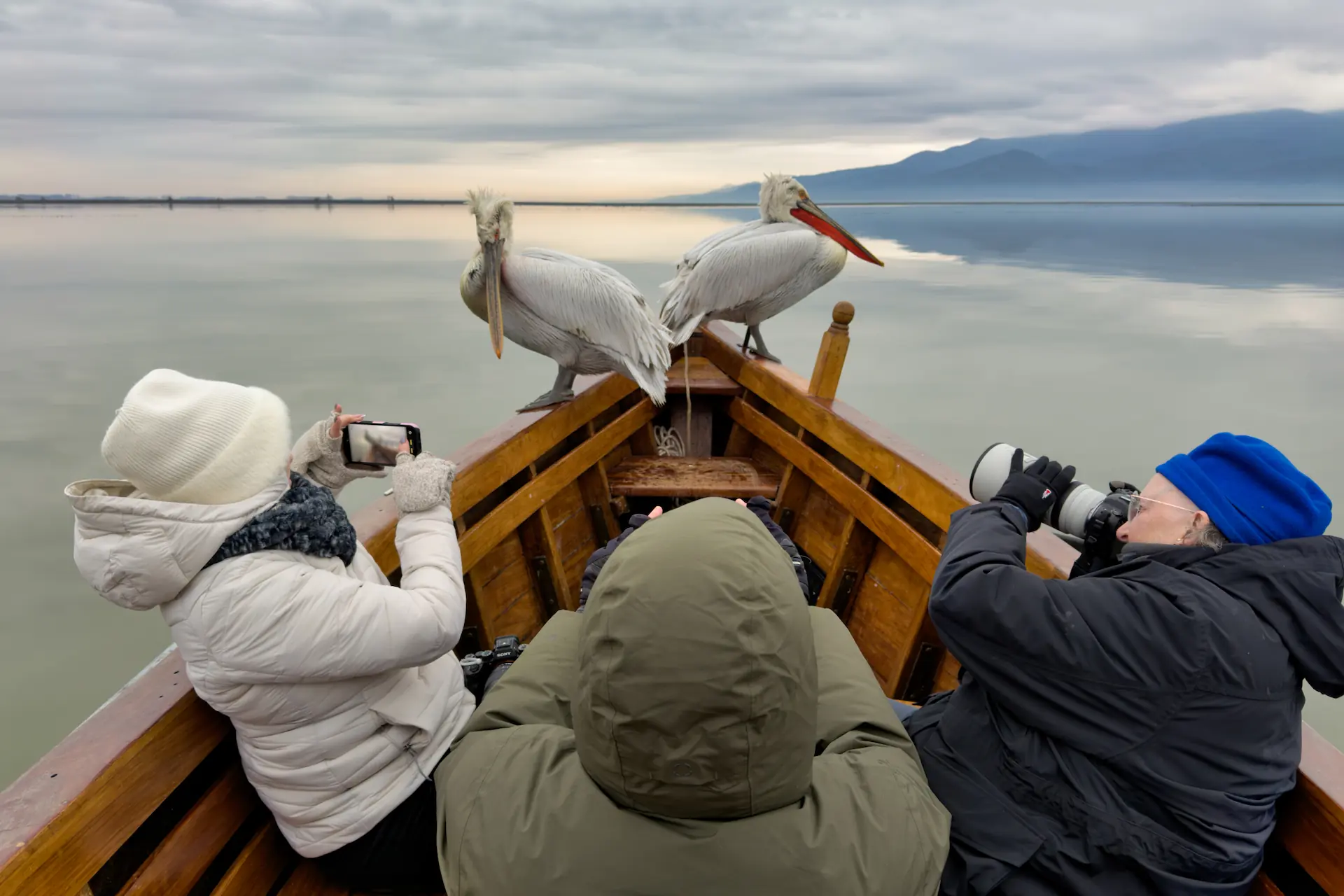
There are weeks at Lake Kerkini that feel less like workshops and more like shared field expeditions. This was one of them.
I welcomed Mark Smith and his friends for a full winter week dedicated to Dalmatian Pelicans – and a few Great White Pelicans, or “Pinkies” as my guests and I like to call them — shaped by cold mornings, quiet boat rides, a brief moment of snow, and that familiar sense of anticipation that only Kerkini brings when the first light begins to rise.
Slow Mornings, Intentional Photography
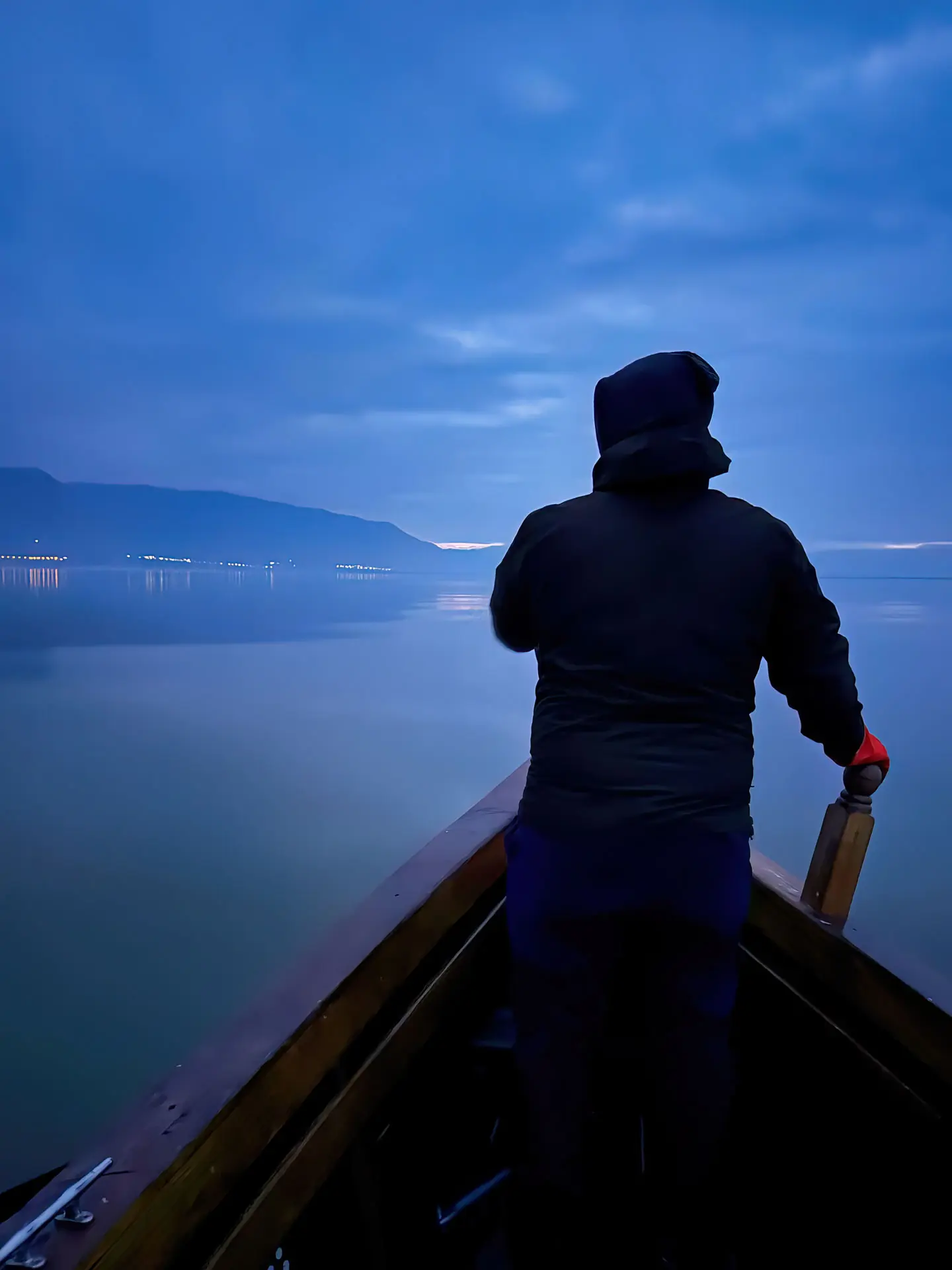
We began each day before sunrise. No rush. No pressure. Just preparation, silence, and respect for the birds.
Winter in Kerkini strips everything down to essentials. Light becomes softer, movements slower, and the pelicans — massive, calm, aware — dictate the rhythm. From the very first morning, it was clear that this group understood the value of patience over speed.
Watching Mark Work in the Field
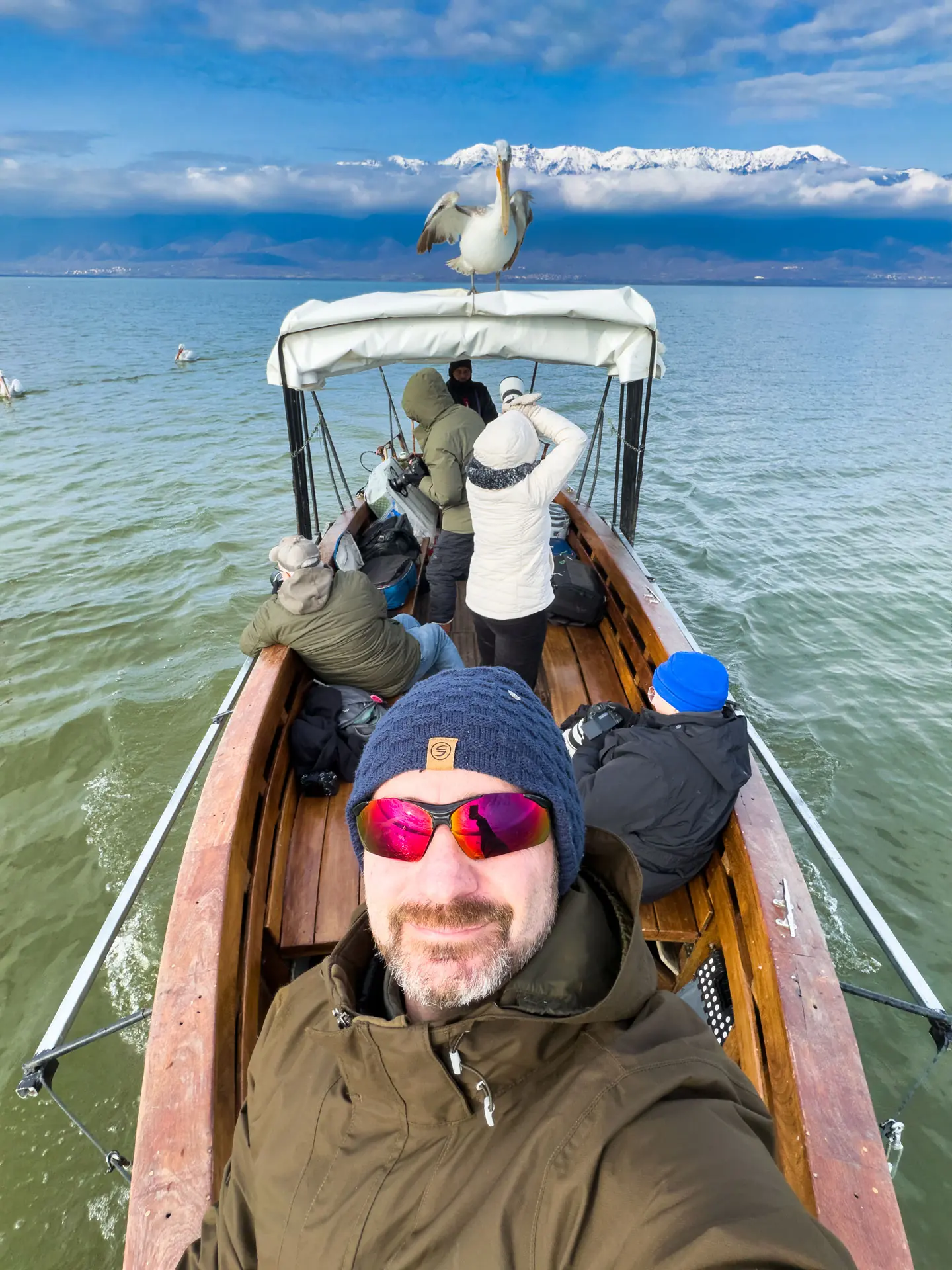
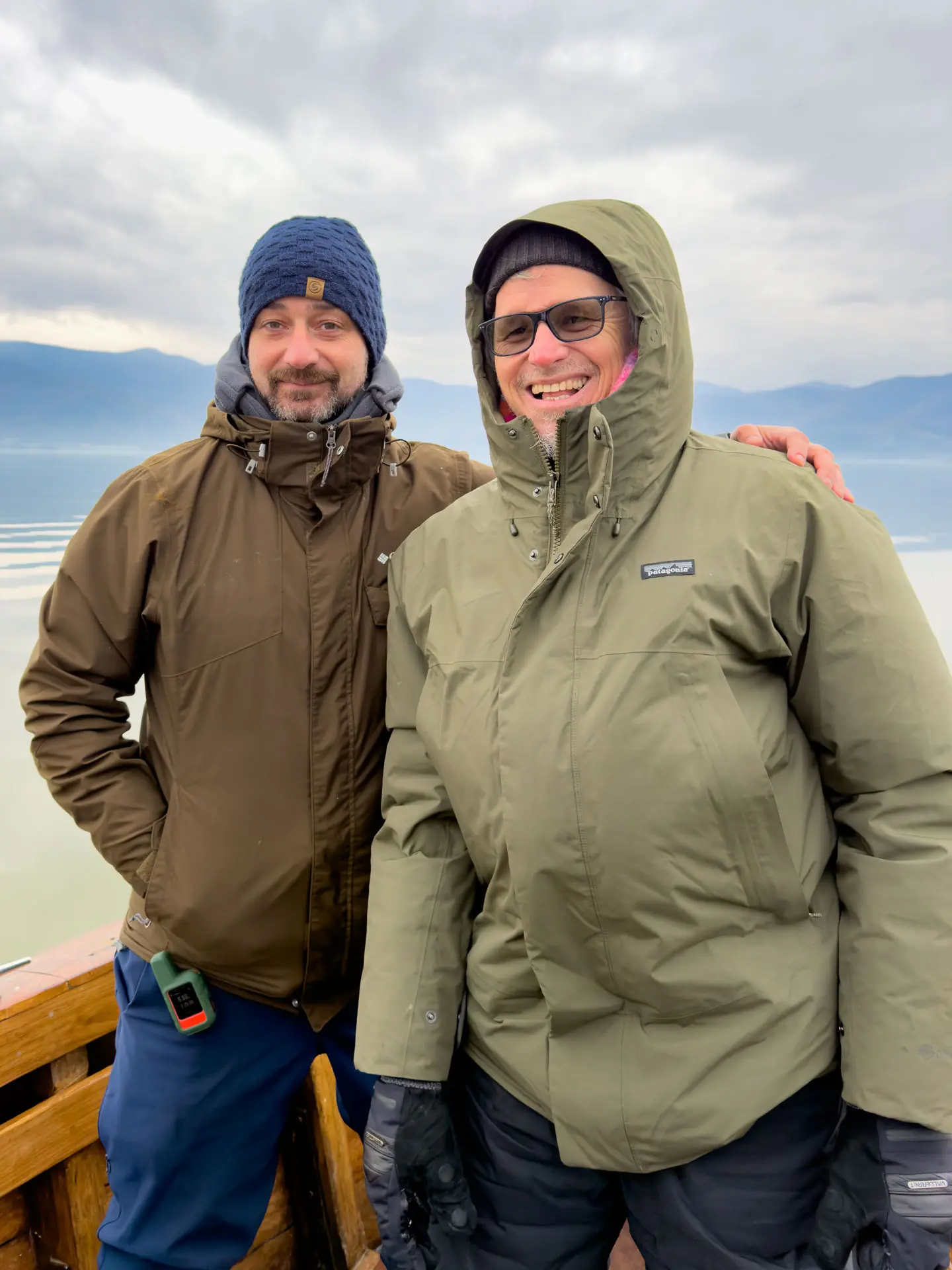
One of my favorite parts of the week was simply watching Mark in the field. He has that rare calm focus that doesn’t announce itself — no big gestures, no rushing. He reads the scene quietly, adjusts small things with intention, and commits fully when the moment is right. On the boat, he stayed locked in as the light shifted, tracking tiny changes in behavior and body language, waiting for the exact head angle, the wing position, the spacing in the frame.
Alongside stills, Mark was of course filming. Switching seamlessly between photography and video, he treated motion with the same discipline: steady compositions, long observations, and an understanding that real wildlife footage is built on patience, not coverage. Watching him move between the two mediums reinforced how closely they’re connected when the foundation is strong field awareness.
On the Water with Dalmatian Pelicans
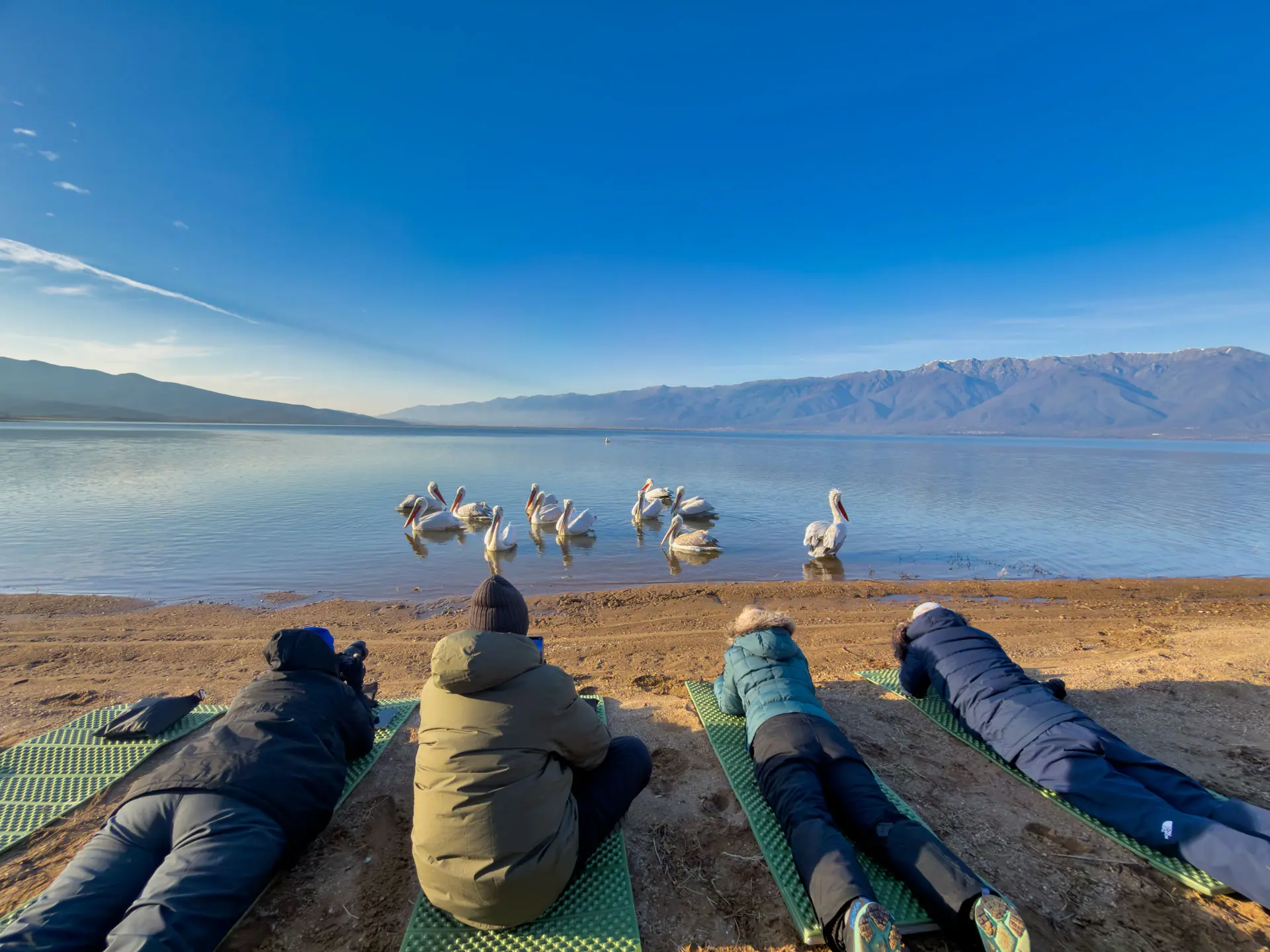
Most morning and evening sessions took place from the boat, with one brief shore-based shoot — the “Yoga Pelican Session,” as Mark likes to call it — and long, quiet drifts across the lake’s glassy surface. Conditions were classic Kerkini: crisp winter air, muted tones, and occasional bursts of golden light that could transform the lake in seconds.
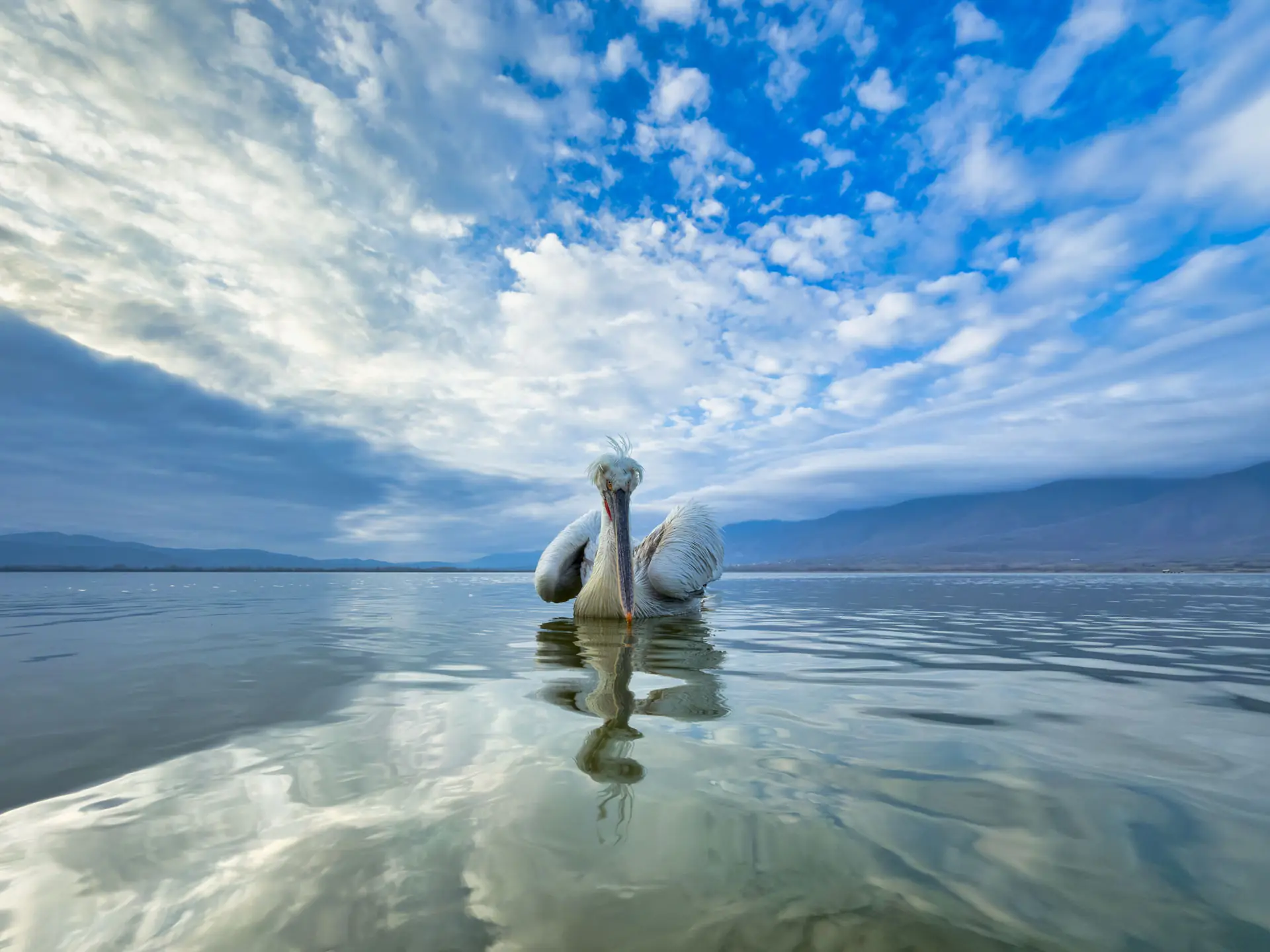
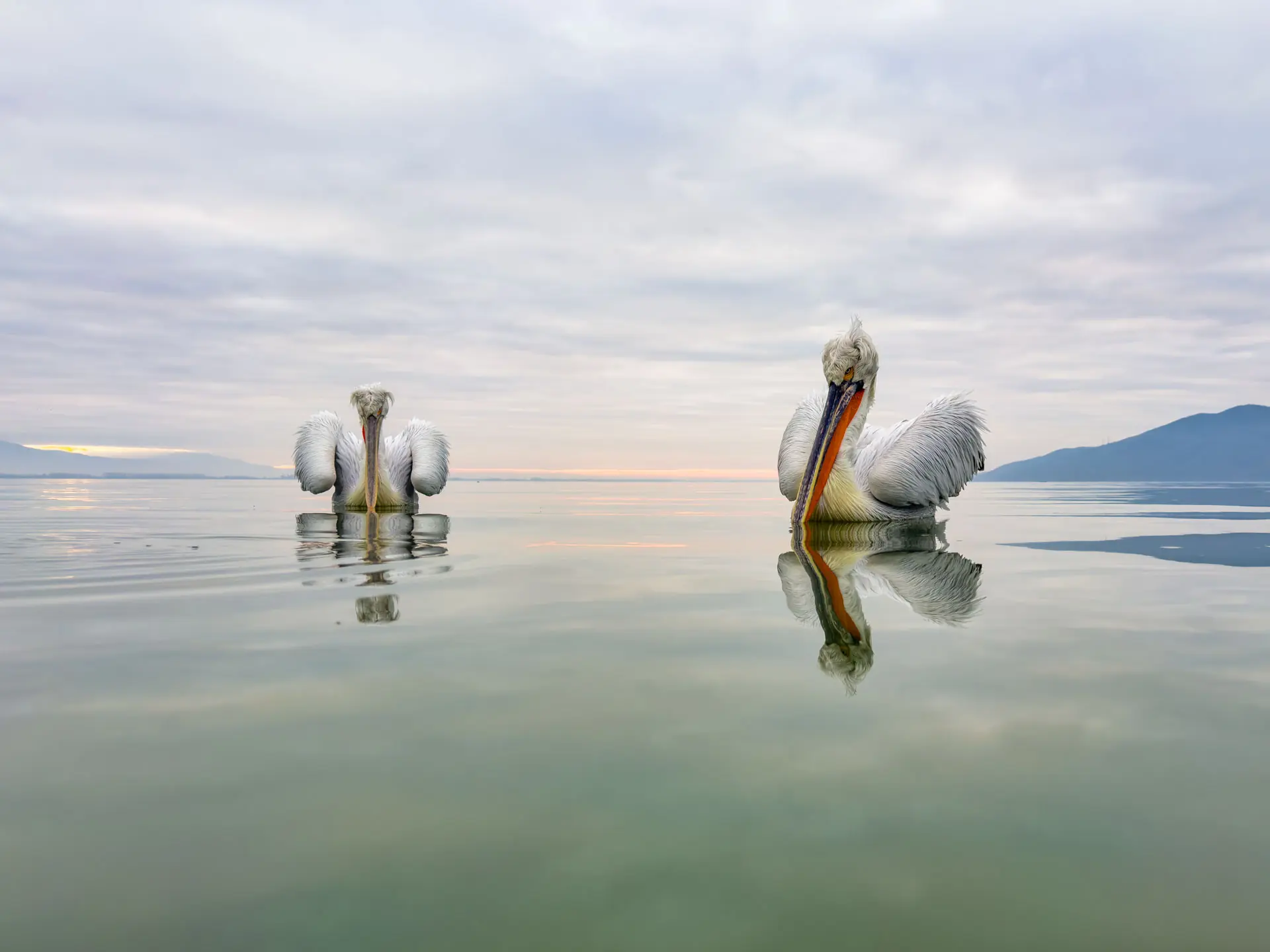
Adult pelicans with fully developed red throat pouches dominated the frame. Eye contact. Wing stretches. Takeoffs so slow and heavy that every frame felt earned.
Mark and the group worked quietly, often shooting in bursts of silence, exchanging quick glances that said “did you see that?”.
Ethics First, Always
As always, the priority was ethical wildlife photography.
The pelicans here are accustomed to boats and humans, but they are never taken for granted. Every decision — angle, distance, duration — was made with the birds’ comfort as the absolute priority. That mindset shaped not only the images produced, but the experience itself.
This is the Kerkini I want people to know.
Leaving with More Than Images
By the end of the week, Kerkini felt like a place we truly settled into — and yet it still managed to surprise us.
The pelicans gave us proximity, trust, and those rare, unrepeatable moments that stay with you long after the cards are backed up. Everyone left with strong portfolios, yes — but more importantly, with a deeper connection to Kerkini and the wildlife that makes this place what it is.
Weeks like this remind me why I keep returning here, season after season: to share Kerkini’s wonders with fellow photographers. Not for the photographs themselves — but for the meaning behind every moment in the field.
To the whole group: thank you for the trust, the openness, and the way you committed to the process. From the boat to the shore, from stills to video, you worked with focus, curiosity, and a genuine respect for the birds and the place. That mindset is what turns a trip into something meaningful.
And a special thank you to Mark. Through the way he works, shares, and communicates his experiences, more people get to discover Lake Kerkini as a living ecosystem and a true sanctuary for Dalmatian Pelicans. What he shares and puts out into the world carries this lake far beyond its shores — to people who might otherwise never know it exists. For that, and for the respect he shows to the birds and the process, I’m genuinely grateful.
All images in this post were shot on an iPhone 17 Pro Max.