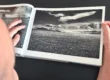
A conservation calendar is not just a collection of beautiful images. When it’s done properly, it’s the visible end-point of a much longer, quieter process: rescue calls, clinical care, recovery, and—when everything goes right—the moment an animal returns to the wild.
That is what the Action for Wildlife 2026 Calendar represents, and it’s why I chose, once again after last year, not to release a personal calendar.
Throughout 2025, Action for Wildlife handled a constant flow of wildlife arriving injured, exhausted, or orphaned. The calendar is built around what that work is ultimately trying to achieve: rehabilitation that leads to release. Each photograph is tied to a real outcome and a real effort—feeding, veterinary procedures, consumables, transport, and the day-to-day costs that keep a rehabilitation center functioning. Supporting the calendar is, in practice, supporting the operational reality behind every successful reintegration.
Collaboration and Mentorship in the Field
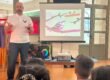
The images in the 2026 edition are a collaboration between three creators: Juliette Poix (European Solidarity Corps), Thomas de Labarre (European Solidarity Corps), and myself. For me, the most important part of that sentence is “collaboration.”
I want to sincerely thank Thomas de Labarre and Juliette Poix for their commitment, sensitivity, and hard work throughout this process. Their images are not the result of chance, but of patience, learning, and respect for both the animals and the people working in the field. Watching them grow into confident, responsible wildlife storytellers—and seeing their photographs become part of a calendar that supports real conservation work—has been one of the most meaningful aspects of this collaboration.


Documenting Releases Without Turning Wildlife Into Spectacle
My role here went beyond photographing. As a professional wildlife photographer and filmmaker, I worked with Juliette and Thomas to help them build a practical foundation in wildlife photography—both technically and ethically. The field doesn’t offer second takes. Light shifts, movement is unpredictable, and access is limited by what is safe for the animal and the team. You learn quickly that there are moments when the camera must come second, and moments when documentation needs to be fast, quiet, and non-intrusive. You also learn to prioritize consistency—clean framing, reliable exposure, natural color, and a visual language that respects context—because a calendar isn’t a random set of images. It’s a cohesive narrative you live with day after day.
That’s the part many people don’t see: conservation images are often made under constraints that exist for good reason. Wildlife rehabilitation is not a photoshoot. The priority is always the animal’s welfare and the protocols that protect it. When a release happens, it is the final step of a long chain of decisions, care, and patience. The photographs in this calendar are, in that sense, not “content.” They are evidence of a process—and a reminder that returning an animal to the wild is never guaranteed, only earned.
This is also why I chose not to produce a personal calendar again this year. I could, of course, curate my own best wildlife work and release it as a standalone collection. But in the conservation space, you have to ask what your work ultimately serves. If there is a calendar that directly strengthens rescue, rehabilitation, and release—while also carrying a story of shared learning and responsible documentation—then I would rather put my energy behind that. Not because personal projects don’t matter, but because this one has a direct line to impact.
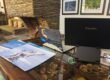
The Action for Wildlife 2026 Calendar is, for the supporter, a practical item on a desk. But it’s also something more specific: a way to participate in the reality behind wildlife rescue in Northern Greece. If you care about conservation, the most meaningful storytelling is the kind that doesn’t end at the image. It circles back into the work itself.


How to Get the Action for Wildlife 2026 Calendar
You can purchase the Action for Wildlife 2026 Calendar directly through the official website of Action for Wildlife by making a €6 donation. The calendar is available now and ready to order, offering a straightforward way to support real conservation work while taking home a set of images that document wildlife releases from 2025.
Photo Credits and Usage Note
Photo credits: Juliette Poix, Thomas de Labarre, and Vaios Vitos. Images created and used with permission in support of Action for Wildlife and the documentation of 2025 wildlife releases.